
- The problem
- Riders cancel while they wait. The longer the ETA, the more of them cancel.
- What I did
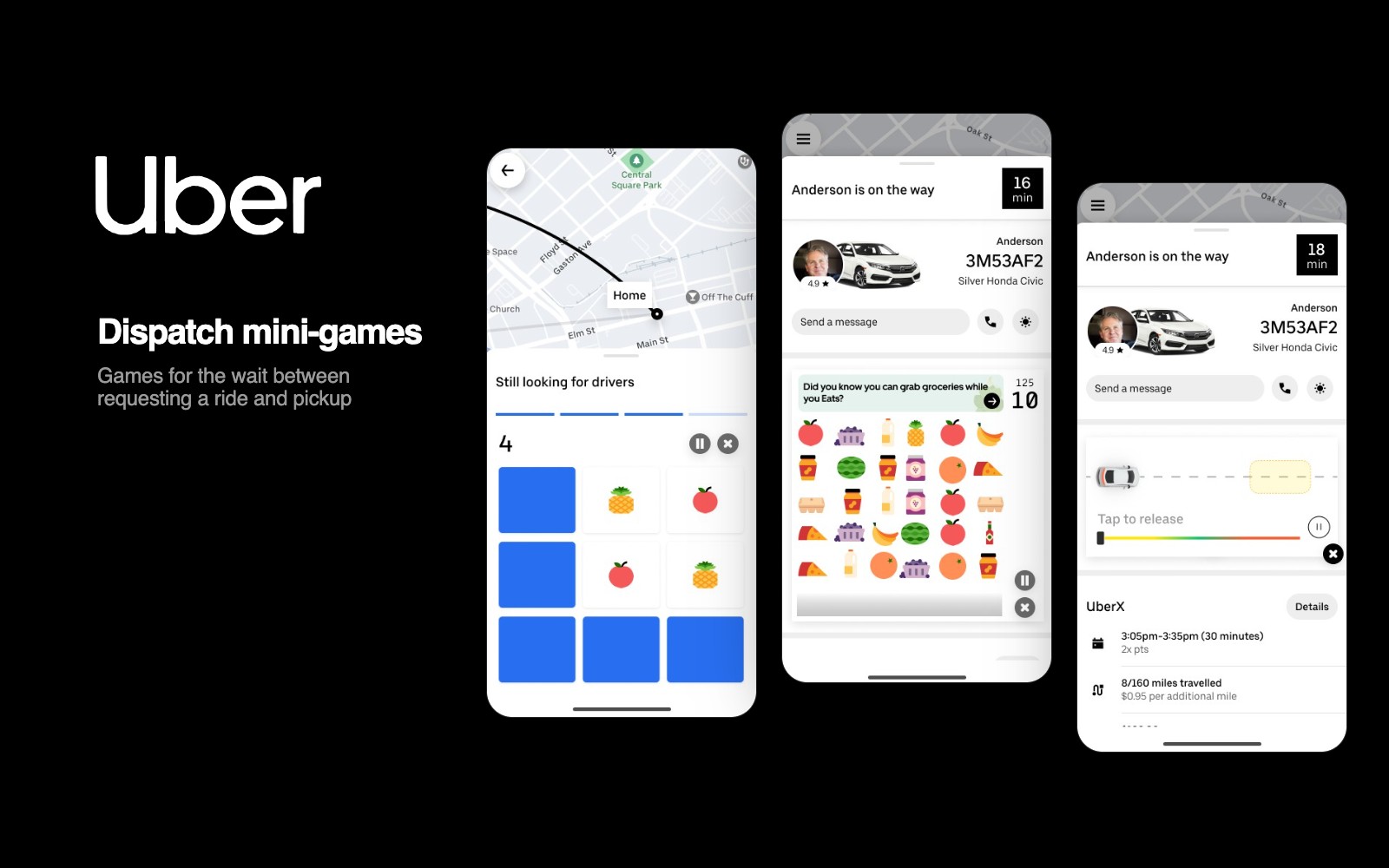
- Mapped the wait screen by screen, prototyped five games, and designed how a game appears, pauses and gets out of the way.
- Where it landed
- The team recommended three games for the en-route screen. The work reached Uber’s code, then stopped there.
The principles every game had to meet
- Easy to play, with almost nothing to learn.
- Simple UI that sits inside the existing sheet.
- Never pull attention from the ride itself.
- Able to point riders to Eats, Rent, Reserve or Connect.
Two screens carry the problem
Uber’s Mobility Growth team wanted to cut rider cancellations, and most of them happen before the car arrives. The core team had no time to explore what riders could do while they wait, so the research and proposal work went to the Matchpoint contractors. I was put on it as the main product designer.
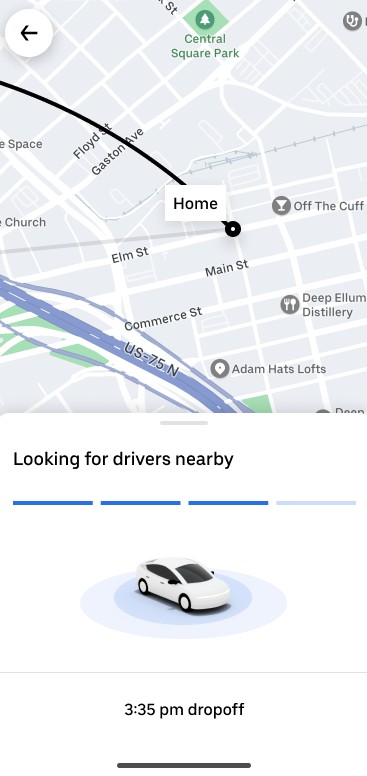
- Dispatch. Long, unexplained spinner times on a screen built for short waits. Riders cancel, re-book, and cancel again.
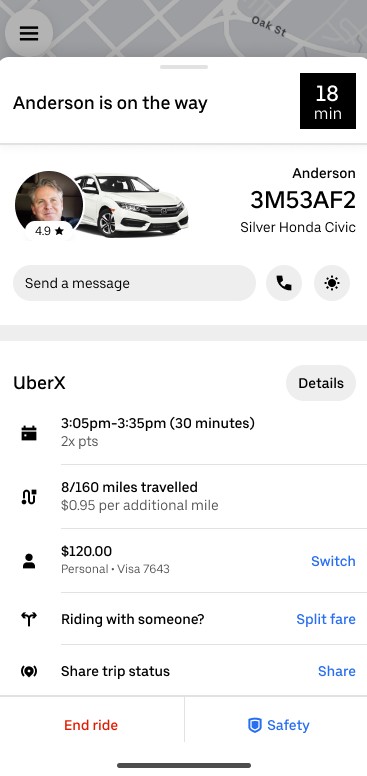
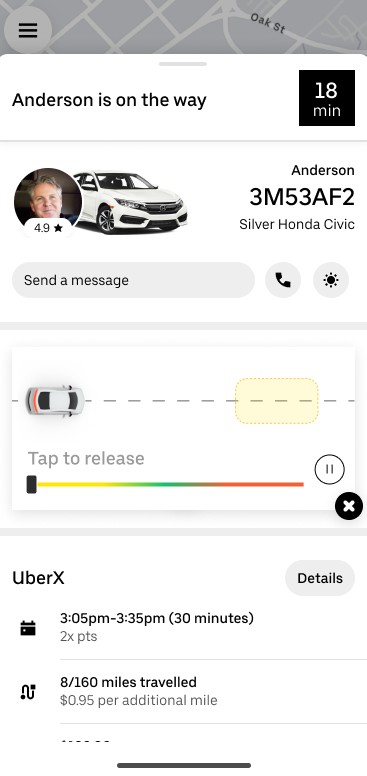
- En route. A static ETA and driver card. With nothing else to do, riders watch the clock and the little car on the map.
First, the whole wait
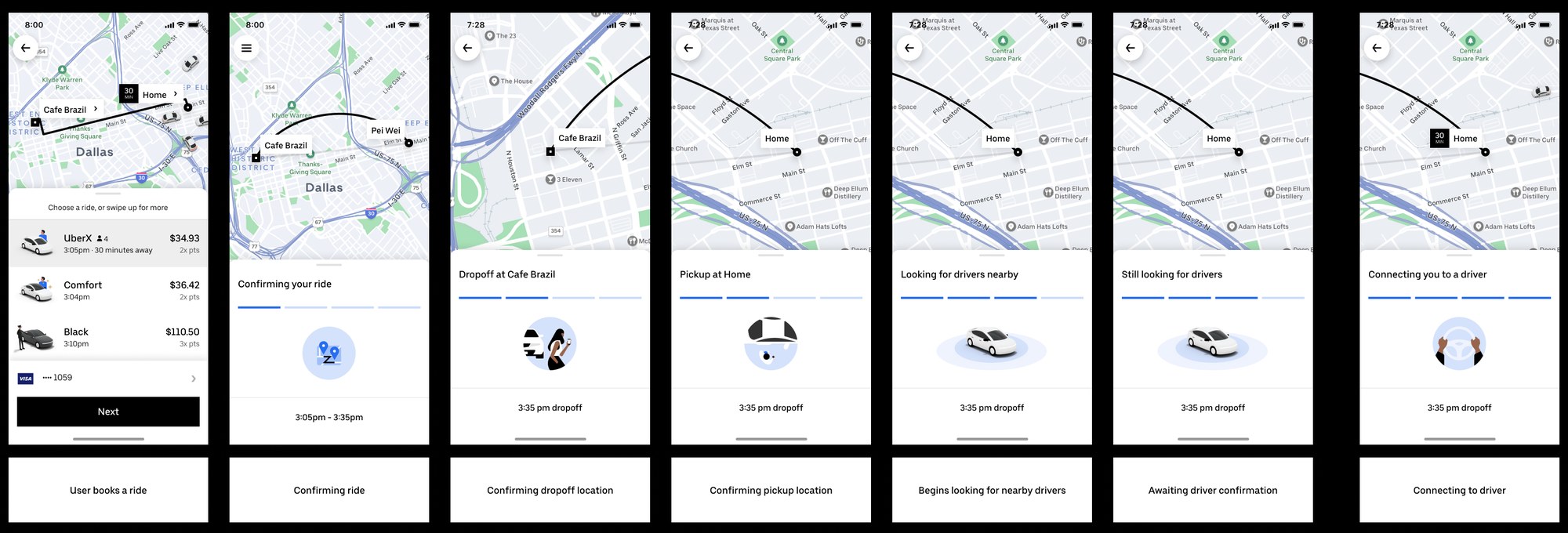
Before any game, I mapped every screen between booking and pickup, then built full rider journeys around them: the rider who waits it out, the one who leaves the app and comes back from a notification, and the one who gives up and cancels.
Five games
I built an interactive prototype for each concept and held it against the four principles. Every game opens with a card for another Uber product, then a short how-to-play card, and pause and close stay on screen the whole time.
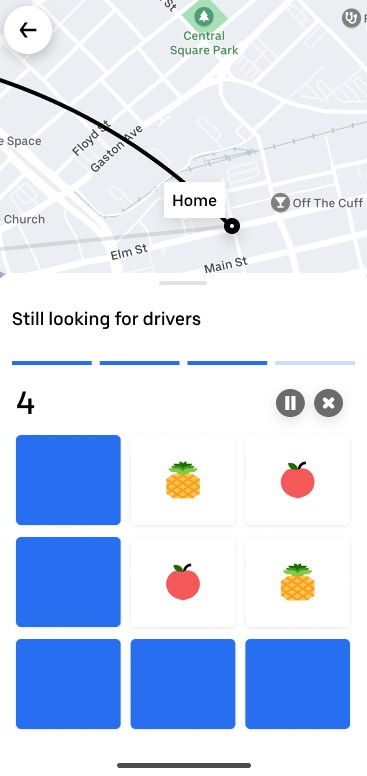
How a game fits the ride
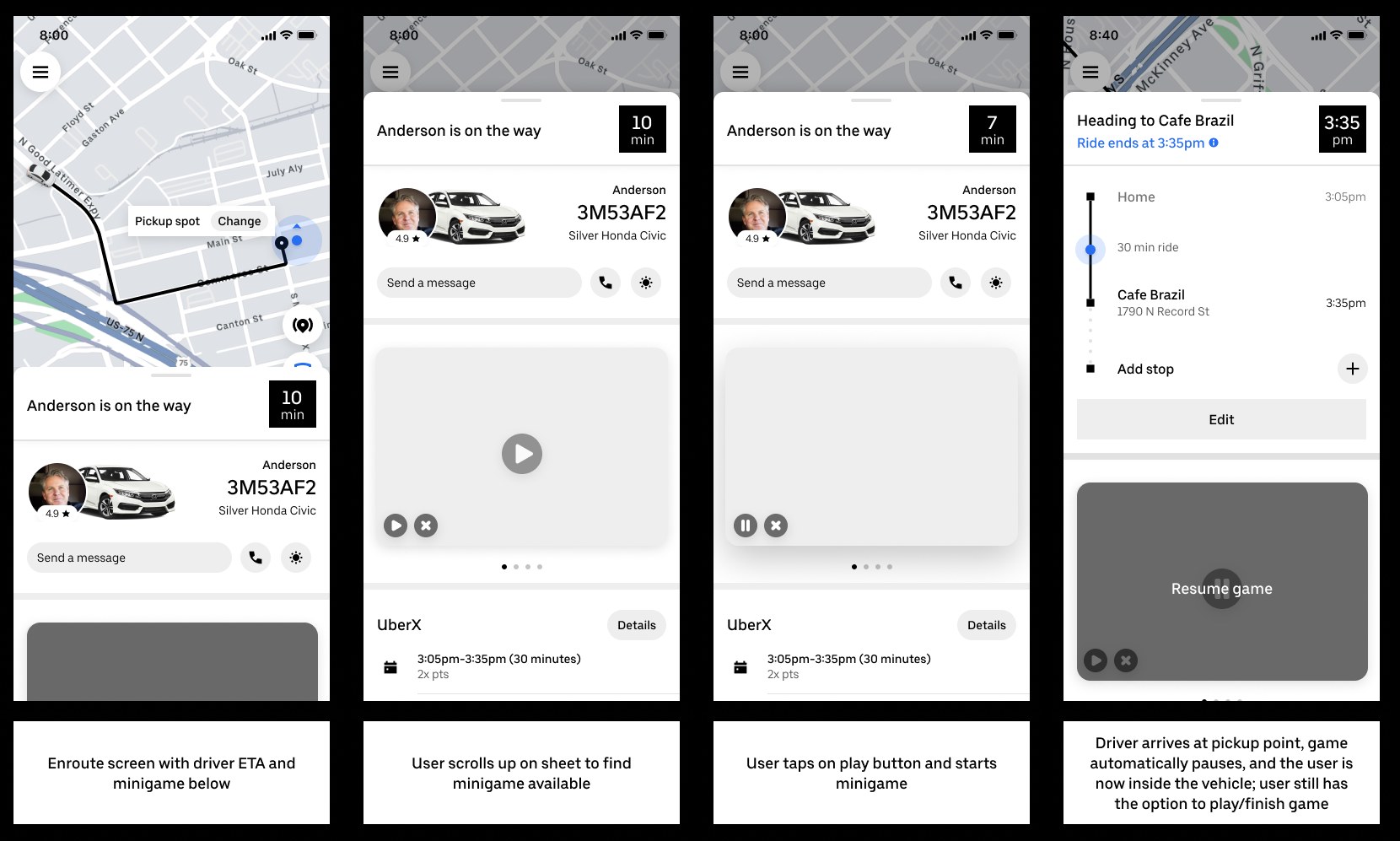
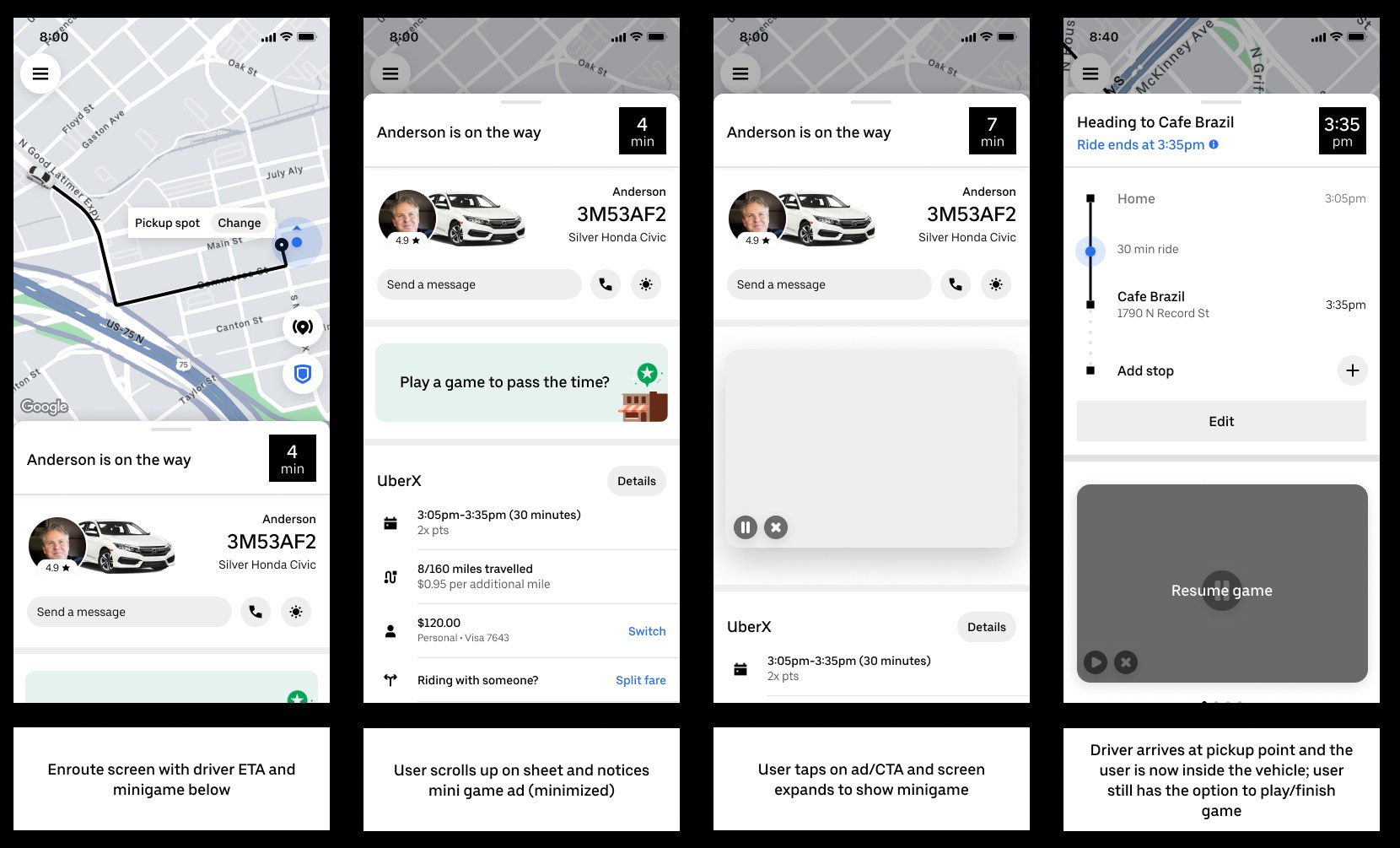
The harder design problem was everything around the game: when it appears, how much room it takes, and what happens when the car shows up.
- A long search. When dispatch runs long, a card offers a game: “Looks like we’re experiencing high wait times. Would you like to play a game while you wait?”
- ETA over 5 minutes. The game sits below the driver card. A scroll finds it and a tap starts it.
- ETA under 5 minutes. I explored two options: a minimized “Play a game to pass the time?” card, or no game at all.
- The driver arrives. The game pauses on its own, and the rider can finish it from inside the car.
- About to cancel. The cancel sheet offers to find another driver instead.
The recommendation
Put the games on the en-route screen. It loses the most riders, its wait is well defined, and it had room for a new module. Dispatch waits were too hard to predict for a game to fit.
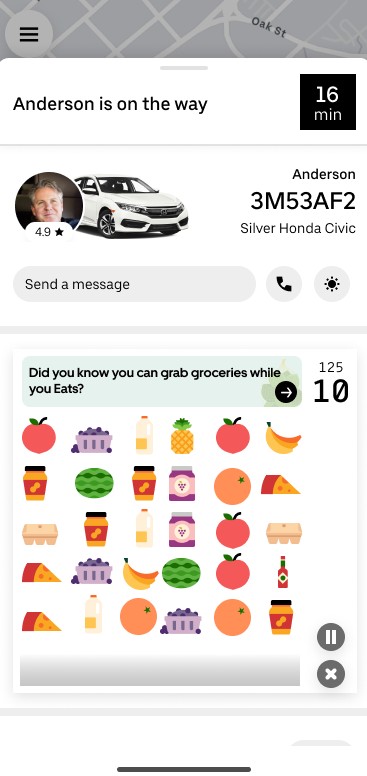
The team’s shortlist was Grocery Crush, Tap & Park and Memory Cards: each easy to pick up, low on concentration, and able to change its content for Eats, Rent or Reserve.
Where it stopped
The mini-game made it into Uber’s codebase, but it never launched, and I never saw results. If it had shipped, this is what I would have measured:
- Primary. Rides canceled after dispatch among riders with ETAs over 5 minutes, with the game against without it.
- Secondary. Time to cancel, and trips completed.
- Guardrails. Missed pickups, since a rider deep in a game might miss the car, and complaints about distraction.
In June 2024, two years after my contract ended, MacRumors found code for in-app games in Uber’s iPhone app. The report doesn’t name any games or screens, so I can’t say how much of this work it carries. It does show the idea kept moving after I left.